Apr 06 2026

Is a meeting “public” if you have to show REAL-ID or pay a fee?

At our request, the Minnesota Commissioner of Administration has directed the state’s Data Practices Office (DPO) to issue an advisory opinion as to whether the Minneapolis-St. Paul Metropolitan Airports Commission (MAC) violates the state’s Open Meeting Law by holding its meetings in an area at the MSP airport accessible only by passing through a TSA checkpoint, which requires either REAL-ID compliant ID, a passport, or paying a $45 fee.

The Commissioner has complete discretion to decide when to issue an advisory opinion. We are pleased that they have decided to do so in this case. We thank the DPO for their (unsuccessful buy helpful) efforts at informal mediation with the MAC, which preceded our request for a formal advisory opinion.

So far as we know, this will be the first official review by any state or local government body, under any state or local open meeting law, of whether a meeting of a government body can be considered “public” or “open” if REAL-ID or a fee is required for entry.

As stated in the Commissioner’s notice of the preparation of an advisory opinion, under Minnesota law, “Although the advisory opinion will not be binding on the Board, a court must give the opinion deference.”

We look forward to the Commissioner’s opinion. According to the notice , “Section 13.072 requires the Commissioner to issue an opinion within 50 days of receipt of the request. Therefore, the Commissioner must issue the opinion by May 21, 2026.”

Mar 15 2026

DMV wants to upload California drivers license data to the national REAL-ID database

The California Department of Motor Vehicles (DMV) has requested more than $55 million in additional funding for costs related to uploading information about every California drivers license or state-issued ID card to the national REAL-ID database, SPEXS.

The DMV Budget Change Proposal is accompanied by a “trailer bill” and a “policy” bill, AB-2156, introduced in February on an “urgency” basis to take effect as soon as enacted, that would override the provisions of California motor vehicle and privacy law that currently prohibit this upload.

Both the budget and policy proposals have the support of the DMV and Governor Newsom. It will be up to members of the state legislature — and public pressure — to stop them before they are enacted into state law and have to be challenged in court.

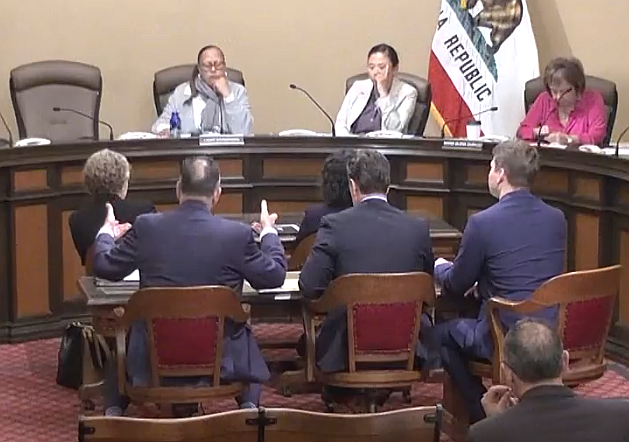
These budget and policy proposals will need to go through both the Assembly and Senate Budget and Transportation committees. The first hearing on the budget proposal is expected to be this Thursday, March 19th, in the Senate Budget and Fiscal Review Committee, Subcommittee 5 on Corrections, Public Safety, Judiciary, Labor and Transportation. The first hearing on the policy bill is tentatively expected to be April 15th in the Assembly Committee on Transportation.

The DMV is asking for $32M in fiscal year 2026-2027 and $23M in 2027-2028 for what it describes as a “State-to-State Verification System (S2S) Project”:

The Department of Motor Vehicles (DMV) requests additional funding and personnel resources to continue DMV’s compliance with the REAL ID Act of 2005 by implementing the State to State (S2S) Program. California’s compliance date for State to State (S2S) is February 16, 2027, and the core DMV systems will interface and connect the driver license (DL)/identification card (ID) S2S data elements with the American Association of Motor Vehicle Administrators (AAMVA) electronic verification and history exchange.

This summary is in parts inaccurate, in parts misleading, and in parts incomplete.

Inaccurate, because California is not in compliance with the REAL-ID Act and, as the proposal is written, this project would not bring the state into compliance.

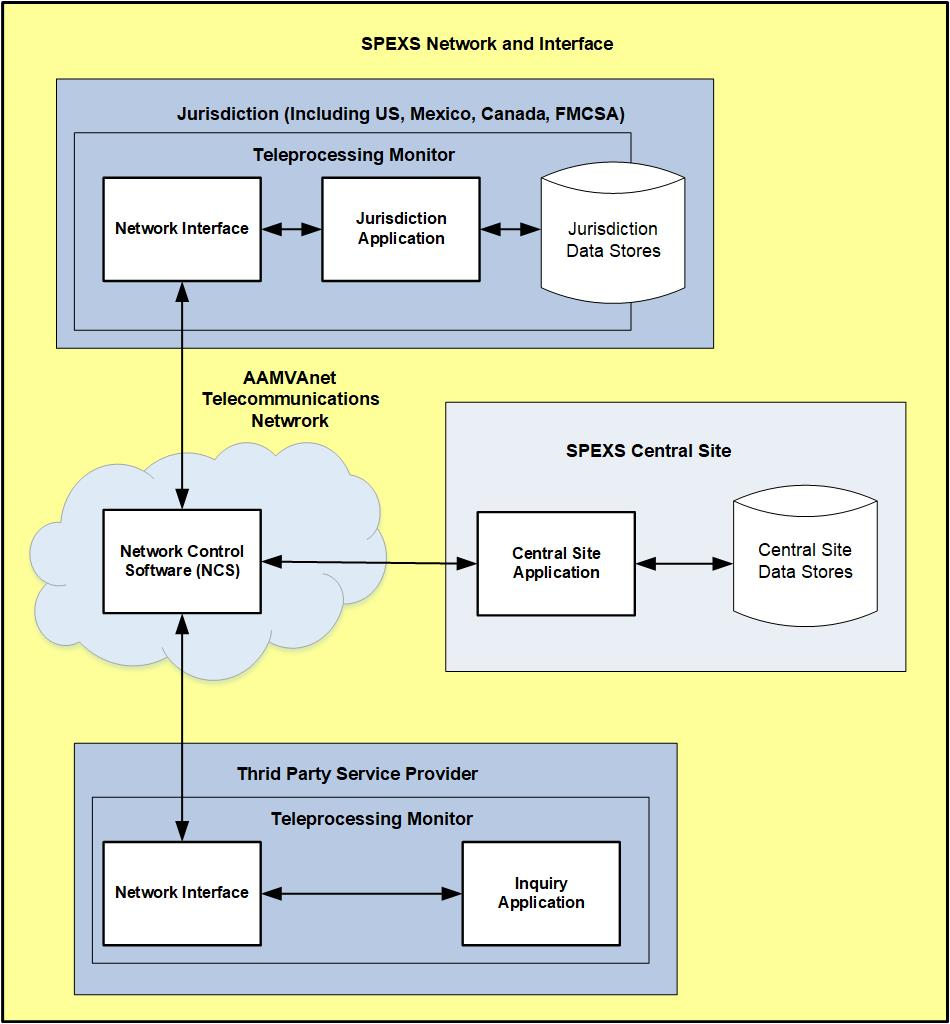
Misleading, because it doesn’t mention the SPEXS national ID database that is central to this system; characterizes as a “state-to-state” system what is actually a hub-and-spoke network in which data is shared between states and AAMVA, not directly between states;  and downplays the role of AAMVA from the owner and controller of the database to the mere operator of an “exchange”.

Incomplete, because it doesn’t explain that the “compliance date” it refers to was set by AAMVA (and could be changed or eliminated by AAMVA), not by any law; says nothing about the status of AAMVA as a private, non-governmental, out-of-state organization not subject to any of the open meetings, public records, due process, privacy, etc. laws that would apply to a Federal or state government agency; and doesn’t consider whether the proposals violate the state constitution.

The policy bill, AB-2156, has similar defects in addition to internal contradictions. These suggest that the drafters of the legislation didn’t fully understand what it would mean, why it’s so much worse than it appears, or that they have a real choice about whether to keep chasing the moving goalposts of Federal demands for REAL-ID “compliance”.

Read More

Feb 17 2026

Show ID or pay a fee to attend a “public” meeting?

Is it an “open” meeting if you have to identify yourself, show ID, and/or pay a fee to attend?

That’s the question presented by today’s meeting of the Minneapolis-St. Paul Metropolitan Airports Commission (MAC), which is scheduled to be held in the “secure” area of the MSP airport reachable only by passing through the Transportation Security Administration (TSA) checkpoint.

As of February 1, 2026, this means individuals who want to attend a MAC meeting, including those who want to make public comments and those who just want to observe, must either (A) show ID credentials the TSA finds satisfactory or (B) pay the illegal $45 per person TSA Confirm.ID fee, answer whatever questions the TSA asks (based on records of the Accurint data broker), and be “allowed” by the TSA, in its unreviewable and arbitrary discretion, to enter the secure area of the airport. The MAC website says that “the MAC will cover this cost for up to three meetings”, but doesn’t say what will happen after that.

This is the first time — in Minnesota or any other state — that we have seen a demand for ID, a demand for a fee, a limit on the number of meetings that can be attended without a fee, or delegation of authority (authority the MAC itself would lack) to an independent third party to demand answers to questions or to decide in its discretion  who to allow to attend a meeting of a government body required by law to be open to the public.

Is any of this legal? We doubt it.

Rules for meetings of government decision-making bodies vary by state. The MAC is a Minnesota state agency whose members are appointed by the Governor.  The Minnesota Open Meeting Law (Minnesota Statutes Chapter 13D) requires that all decision-making meetings of entities such as the MAC “must be open to the public”.

The Minnesota law doesn’t define what “open to the public” means, but we don’t think it includes any of these conditions and restrictions on attendance:

  1. Requiring individuals to identify themselves (rather than attending anonymously, as they may wish to do if e.g.  they fear retaliation for attending or making public comments).
  2. Requiring individuals to have or show ID credentials.
  3. Requiring individuals to answer questions including questions from a third party (in this case, the TSA).
  4. Require individuals to pay a fee, or limiting the number of open meetings an individual may attend without paying a fee. (In this case, the fee is patently illegal, and having agreed to pay the fee on behalf of individuals attending MAC meetings, the MAC itself would have standing to challenge the fee.)
  5. Granting a third party discretion to decide who will, and who will not, be allowed to attend a meeting. (The MAC website notes that “Verification is not guaranteed”, i.e that the TSA may choose not to allow an individual to pass through the checkpoint, even if they identify themselves verbally, pay the $45 fee or have it paid for them, and answer all of the TSA’s questions.)

None of this fits within any reasonable definition of “open to the public”.

Any member of an entity subject to the Minnesota Open Meetings Law who violates this law, including by attending a business meeting of an agency that isn’t open to the public, is personally liable for a $300 fine for each “occurrence”. They have to pay the fine themselves. The agency isn’t allowed to pay it for them. Under a “three strikes you’re out” provision of this law, any office-holder found guilty of three separate violations of the Open Meetings Law forfeits their office for the remainder of their term.

Meanwhile, we’re still waiting for a full response to our request under the Minnesota Government Data Practices Act for information about the basis for the MAC’s dubious claim that it lacks any authority to limit where in the airport Federal agents can go.

The last word we received is that we can expect a response to our public records request tomorrow — the day after the monthly MAC meeting today at which we and others might (if we were allowed by the TSA to attend) have asked questions of MAC members about the decision to give Federal agents free run of the airport without challenge.

Feb 11 2026

First-hand reports confirm you can still fly with no ID

First-hand reports confirm that some people can still fly with no ID card or documents, despite a new scheme of the Transportation Security Administration (TSA) to extort an illegal $45 fee from each airline passenger who doesn’t have, or doesn’t choose to show, ID that the TSA deems to be “compliant” with the REAL-ID Act.

As long as they pay the $45 fee, travelers with no ID or with noncompliant ID have been treated the same way as before the the TSA began demanding the fee on February 1, 2026:

We’ve seen no report of the TSA stopping travelers without ID or without REAL-ID from flying, as long as a they have paid the illegal $45 per person fee.

The only apparent change since the imposition of the $45 fee on February 1 of this year is that instead of phoning the TSA’s ID Verification Call Center (IVCC) and relaying questions and answers verbally between the IVCC and travelers without ID, TSA checkpoint staff are now using a laptop or tablet app to receive the questions and send back the  answers.

The TSA has complied with none of the legal requirements for notice and approval of the information-collection app being used for questioning of travelers without ID. This leaves it unclear whether a human is still involved in fly/no-fly decisions about travelers without ID or whether this decision-making has been delegated to secret algorithms encoded within the app or at the central site that connects the app to Accurint.

We haven’t yet seen any reports of what happens if a traveler without ID or without REAL-ID who hasn’t paid the $45 fee or tries to go through a TSA checkpoint, or doesn’t leave when told to do so. Nor have we heard what happens if a traveler without ID exercises their right to remain silent when questioned about their Accurint file by checkpoint staff. We expect that they would be arrested by local police and/or assessed a civil penalty by the TSA. The Paperwork Reduction Act provides a “complete defense” against any such penalties, but raising that defense would be risky and could be expensive.

Feb 02 2026

“The TSA’s New $45 Fee to Fly Without ID is Illegal”

Edward Hasbrouck of the Identity Project has the lead article today on Frommers.com, “The TSA’s New $45 Fee to Fly Without ID is Illegal”, Says Regulatory Expert:

On Sunday, February 1, the Transportation Security Administration (TSA) began charging travelers without REAL ID $45 to fly.

This may come as a surprise, but no U.S. law requires you to show ID to get on a domestic flight—or pay the new $45 TSA fee.

It doesn’t matter if you have REAL ID or not. The law doesn’t mandate any ID….

The REAL-ID Act pertains only to which IDs are accepted by Federal agencies in circumstances where ID is required.

The Act did nothing to legally impose a new ID requirement where there wasn’t one already, such as for airline passengers….

Requiring ID won’t make us safer, but it enables surveillance and potential control of our movements….

If you try to defend your rights and refuse, you may be arrested and/or assessed a “civil penalty” by the TSA. Defending yourself in court or finding a lawyer with appropriate expertise may be hard.

But the law, as written, is clear: You have the right to fly without ID, without paying a $45 fee, and without answering questions. Exercising that right, however, is another matter.

Read the full article on Frommers.com.

Jan 29 2026

TSA plans illegal ID and fee shakedown starting Feb. 1, 2026

For more than twenty years, we’ve seen a never-ending succession of lawless empty threats made by the Transportation Security Administration (TSA) and Department of Homeland Security (DHS) — amplified by airlines, airport operators,  and state driver licensing agencies — to prevent ticketed airline passengers from exercising their right to travel by common carrier if they don’t have or show ID or show state-issued IDs not certified by the DHS as “compliant” with the Federal REAL-ID Act of 2005.

To date, none of these threats have been carried out.

Now the TSA is threatening, yet again unlawfully, that starting February 1, 2025 it will prevent any traveler from passing through a TSA or TSA-contractor checkpoint at a US airport with no ID or “non-compliant” ID unless they (1) pay an illegal $45 per person fee and (2) submit to as-yet undisclosed new “identity verification” procedures that are likely to include illegal demands for additional personal information.

What will happen on February 1st  if you try to fly without ID, or without REAL-ID, and without paying the $45 fee or answering more questions? Will the TSA stop you from flying? If so, how can you challenge the TSA’s denial of your right to travel?

Read More

Jan 28 2026

OK legislators sue to block upload of state residents’ data to AAMVA’s national REAL-ID database

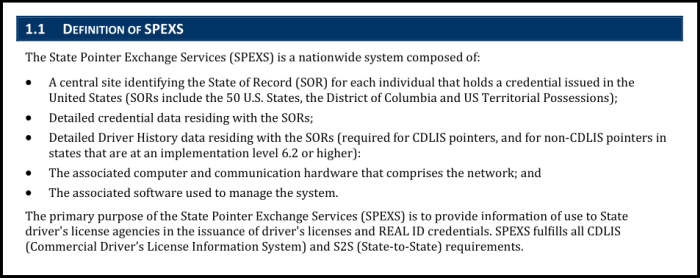
Today a bipartisan group of thirty-four members of the Oklahoma state legislature petitioned the Oklahoma Supreme Court to block the upload of information from all Oklahoma drivers licenses and ID cards to the SPEXS national  REAL-ID database operated by the American Association of Motor Vehicle Administrators (AAMVA).

The petitioners, led by Sen. Kendal Sacchieri (R-Blanchard), include sixteen members of the Oklahoma Senate and eighteen members of the Oklahoma House of Representatives. They are represented by Oklahoma City attorney Wyatt McGuire.

Service Oklahoma, the agency that issues drivers licenses and state ID cards, plans an initial bulk upload of data about all Oklahomans to the SPEXS database over the Presidents’ Day weekend of February 14-16, 2026, unless the upload is blocked by the state Supreme Court or suspended or postponed by Service Oklahoma or Gov. Kevin Stitt.

The state legislature convenes for its next session February 2nd, and multiple steps are required before a bill can be enacted. Unless the bulk upload to SPEXS is cancelled or postponed, it will take place just before the legislature can take any action to stop it.

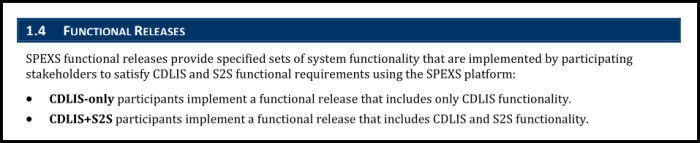
We don’t know whether the upload was scheduled deliberately to preempt the possibility of legislative oversight. But we’ve seen the same pattern in other states where governors and/or driver licensing agencies arranged to join the the SPEXS database and the misleading-named “State to State” (S2S) network — in which data is transmitted through AAMVA, not directly between states — just before the start of a session at which the legislature might have questioned or taken action to stop the upload.

In Alaska, for example, the Department of Administration carried out its initial bulk upload of state residents’ data to SPEXS over the weekend of January 28, 2017, just days after the start of the legislative session and just before hearings were scheduled on legislation to block the upload.

Like many other states, Oklahoma offers residents a choice of a REAL-ID Act “compliant” or “non-compliant” drivers license or state ID card. Many people choose a “noncompliant” license or ID specifically because they want their data kept in-state. But in order for a state to join S2S, AAMVA’s rules — not any law — require it to upload information about all drivers licenses and state IDs, including “noncompliant” ones, to AAMVA’s national SPEXS database.

Sen. Sacchieri introduced a resolution in the Oklahoma state legislature last year to reaffirm that information about Oklahoma residents who apply for a drivers license or ID that doesn’t comply with the REAL-ID Act may not be sent out of state or to the national REAL-ID database. But that bill didn’t get a vote in 2025, and any action by the state legislature in 2026 won’t take effect until after the planned February 14-16 upload.

As the legislators point out in their brief to the state Supreme Court, Oklahoma law, 47 O.S.  § 6-110.3a(A)(C), already prohibits sharing personal information about drivers license or ID card applicants except as required by the REAL-ID Act. As the legislators also point out, the Federal REAL-ID Act does not (and cannot) require states to take any action. Whether to “comply” is a choice for each state to make.

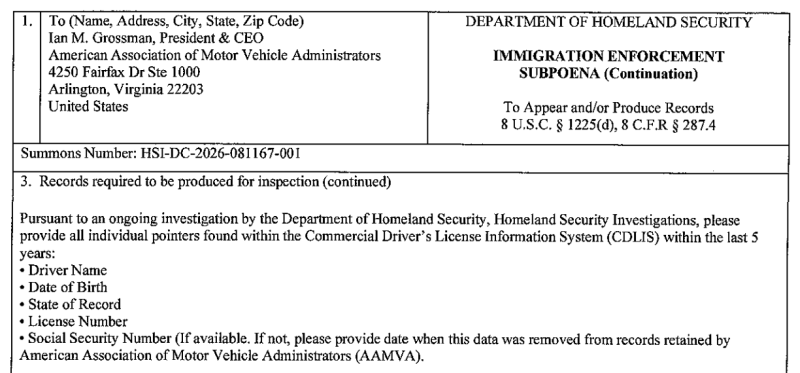
Once personal information is uploaded to SPEXS, it is out of the state’s control. The Federal government could use a subpoena or other legal process to order AMMVA, as a private entity, to hand over SPEXS data and not to disclose the subpoena to the state. No state that participates in SPEXS can really know whether AAMVA has already chosen or been compelled to hand over data about its residents to Federal agencies, or for what purposes.

The thirty-four Oklahoma state legislators joining the petition have asked the state Supreme Court to stay and temporarily enjoin the upload of Okahomans’ data to SPEXS pending consideration of their lawsuit. Their complaint is rooted in the separation of powers and the authority of the legislature: No Oklahoma law authorizes the upload, no funds have been appropriated for it, and it contravenes the intent of the legislature as expressed in current Oklahoma law.

The fact pattern in Oklahoma is typical of what has happened in other states that have uploaded their residents’ personal information to SPEXS without advertising their plans or seeking explicit legislative authorization or funding for joining the national database.

After we were the first to report on the SPEXS database, AAMVA removed the specifications for the database from their public website, and threatened to sue us to get us to take down the legal copy of the specifications we had posted. AAMVA is a private entity with no legal authority, but it acts like a lawless, rogue government agency.  What AAMVA and its Federal and state allies fear most is informed public debate and legislative oversight.

AAMVA, the Federal government, and their state allies don’t want you know that there is a national drivers license database, much less any details about the database or AAMVA.

We look forward to a ruling by the Oklahoma Supreme Court that will allow the Oklahoma legislature time to exercise oversight over Service Oklahoma and encourage legislators in other states to exercise their rightful authority over state agencies’ relations with AAMVA.

Jan 15 2026

TSA extorts $45 from each air traveler without REAL-ID

screenshot: Step 3: Show your receipt to the TSA officer and follow their instructions

Today the TSA launched a flagrantly illegal new extortion program, TSA ConfirmID,  to collect $45 from each airline passenger who wants to fly without showing REAL-ID.

As of today, only the payment platform for this “ID verification” program is operational. If you want to fly without REAL-ID on or after February 1, 2026, a new TSA video instructs you to pay $45 each through the Pay.gov website, bring your receipt to the TSA checkpoint at the airport, “show your receipt to the TSA officer and follow their instructions”.

Payments are accepted by ACH transfer from a bank account, credit or debit card, Venmo, or PayPal.

What will the TSA officer instruct you to do at the checkpoint? The TSA says that:

TSA will then attempt to verify your identity so you can go through security; however, there is no guarantee TSA can do so. Please note: Using TSA ConfirmID is optional. If you choose not to use it and don’t have an acceptable ID, you may not be allowed through security and may miss your flight.

The TSA says that you “may” not be allowed through the checkpoint, not that you “will” not. And the TSA’s FAQ says that, “In the event you arrive at the airport without acceptable identification (whether lost, stolen, or otherwise), you may still be allowed to fly”.

What are the procedures for this “attempt to verify your identity”? What are the criteria for  whether or not the TSA will allow you to fly? We don’t know.

A TSA propaganda video released last week falsely claims that, “Everyone knows that when you fly you have to bring a REAL-ID or a passport.” In fact, 200,000 people a day fly without REAL-ID and without a passport. (Any passport of any country is considered REAL-ID.)

It’s unclear what will happen to travelers who show up at TSA checkpoints on February 1st without REAL-ID, or with no ID at all, whether or not they have paid the $45 per person “TSA ConfirmID” fee. See our FAQ about your rights and what might happen.

As we pointed out when the TSA announced this plan in December, no law authorizes this scheme. No law requires airline passengers to have, carry, or show any ID — as the TSA itself has consistently argued, at least to date, when the issue has been raised in court.

The TSA has promulgated no regulations for “TSA ConfirmID”, has published no Privacy Act notice for the information collected from travelers either when they pay the $45 fee or when they go through the TSA checkpoint, and has neither requested nor received approval from the Office of Management and Budget (OMB) for this collection of information, as is required by the Paperwork Reduction Act (PRA).

“TSA ConfirmID” isn’t mentioned in any of the Privacy Act notices for the TSA’s systems of records. Operation of a system of records by a Federal agency without first publishing a proper notice in the Federal Register is a criminal violation of the Privacy Act on the part of the responsible  agency employees:

Any officer or employee of any agency who willfully maintains a system of records without meeting the notice requirements of subsection (e)(4) of this section shall be guilty of a misdemeanor and fined not more than $5,000.

Presumably, data collected from individuals who pay the $45 “TSA ConfirmID” fee is passed on to the TSA and stored in some (undisclosed) TSA system of records. The TSA officers and employees responsible for that system of records are, as of today, criminals.

Even the payment platform for the $45 fee is in flagrant violation of multiple Federal laws. The Pay.gov payment site and TSA ConfirmID payment form display no OMB control number, as is required by the PRA.

The Department of the Treasury, which operates Pay.gov, says specifically that:

An agency may not conduct or sponsor, and a person is not required to respond to, a collection of information unless it provides notice of a currently valid Office of Management and Budget (OMB) control number. Among other things, a notice of the expected time burden is required…. Pay.gov provides services to Federal agencies. These services include the posting of agency forms. Required notices that accompany these forms are the responsibility of those agencies.

There’s a link from the payment page to a Privacy and Security Policy, but the linked page doesn’t mention the Privacy Act, the PRA, or an OMB control number.

Since the TSA hasn’t chosen to follow the law or disclose any of its plans, the only way to figure out the de facto “rules” is to reverse engineer them from travelers’ experiences.

If you show up at a TSA checkpoint on or after February 1st without REAL-ID, or with no ID, please let us know whether or not you paid the “TSA ConfirmID fee” and what happened to you at the cehckpoint..

Keep a copy and/or take a photo or screenshot or any printed or online forms you are asked to fill out. If the forms or user interface pages don’t include a valid OMB control number, you can legally ignore them without penalty.

Are you allowed to fly without REAL-ID? With no ID? Without paying the “TSA ConfirmID” fee? If you are prevented from flying, who stops you? What do they say is the basis for their action?

You have the right to film and record at TSA checkpoints. Please share your experiences so we can better inform future flyers without ID or without REAL-ID.

Dec 05 2025

TSA Confirm.ID: TSA plans to charge air travelers without ID or without REAL-ID $3B a year in extra fees for extra questioning

TSA Coinfirm.ID

Since scare tactics haven’t gotten everyone in the U.S. to sign up for REAL-ID or show ID whenever they fly, the Transportation Security Administration (TSA) is turning to extortion through the threat of a new $45 fee to fly without “acceptable” ID.

The proposed fee and the modified “ID verification” program it would pay for are being described by the TSA as a fait accompli. But even if they were authorized by Congress and Constitutional — which we don’t think  they are — they have several months-long procedural hurdles to clear before they could legally be put into effect, and even then they would face the possibility of litigation by travelers, states, airlines, and perhaps others.

$3 billion dollars a year in extra fees for extra questioning of flyers

In its latest round of rulemaking by press release, the TSA has issued a series of procedurally irregular announcements indicating that the agency plans a new fee-based procedure for air travelers without “acceptable” ID, including those presenting ID that the TSA deems not to comply with the REAL-ID Act and those who don’t have or don’t show any ID at all:

  • A notice published by the TSA in the Federal Register on November 20th said the fee for flying without ID or without REAL-ID would be $18 per person for each ten-day period.
  • A second notice published on December 3rd, just two weeks later, announced that “based on review and revision of relevant population estimates and costs… and a revised methodology… TSA recalculated overall costs and determined that the fee necessary to cover the costs of the TSA Confirm.ID program is slightly more than $45.”

The drastic revision of the cost estimate and fee, so soon after the initial announcement, suggests that the initial estimate was sloppy,  rushed, or both, and perhaps that the entire new program is being hastily implemented, may not yet be clearly defined, and may fit the definition of agency action that is “arbitrary, capricous, an abuse of discretion, or otherwise contrary to law”. Any such action is liable to be “set aside” by the courts on the basis of the Administrative Procedure Act (APA).

According to a press release posted on the TSA website on December 1st, “Currently, more than 94% of passengers already use their REAL ID or other acceptable forms of identification.” That’s only one percentage point higher than the 93% compliance the TSA announced after the first few weeks of REAL-ID “enforcement” in May 2025. These largely unchanged numbers suggest that the TSA is making little progress in persuading more travelers to sign up for a national-ID scheme or show their papers at TSA checkpoints.

Based on the current rate of roughly three million people a day passing through TSA checkpoints, 6% of whom don’t show ID the TSA deems “acceptable” (or don’t show any ID), 180,000 people a day would be assessed the proposed new $45 fee. That would generate $8.1 million a day, or $2.96 billion a year, in new revenue for the TSA.

The TSA’s initial notice claimed that currently “taxpayers pay[] for an individual’s identity verification services provided by TSA”. But each airline passenger already pays a fee of $5.60, collected by the airline, each time they pass through a TSA checkpoint at an airport.

This “9/11 Security Fee” was imposed when the TSA was created, and is supposed to cover the TSA’s costs  of searching air travelers. Air travelers, not taxpayers, pay for the TSA to grope, interrogate, and delay us. Charging a fee for this “benefit” is like charging a “police user fee” to be pulled over in a traffic stop, even if no violation is found and no citation is issued.

Read More

Oct 08 2025

Repeal the REAL-ID Act

After twenty years of resistance by individuals and state governments; twenty years of failed threats, intimidation, and extortion by the Department of Homeland Security (DHS) and the Transportation Security Administration (TSA) to get states to administer and participate in a distributed national-ID scheme; twenty years of construction of an outsourced, unaccountable national ID database; and twenty years of lies by the DHS and TSA about what the REAL ID Act requires and whether states and individuals are “complying”; it’s time to repeal the REAL-ID Act of 2005.

Last month Sen. Rand Paul (R-KY) introduced S. 2769, a short, simple bill to repeal the REAL-ID Act of 2005 in its entirety. This isn’t a bill to “reform” or put “guardrails” on the REAL-ID Act. It’s not amendable to reform. The REAL-ID Act was a bad idea from the start, hastily enacted at the height of post-9/11 panic with no hearings or debate. It’s time to acknowledge that mistake, and to repeal the REAL-ID Act. S. 2769 is long overdue.

We urge other US Senators from both sides of the aisle to co-sponsor S. 2769,  and US Representatives to introduce the similar legislation in House.

As Chair of the Senate Committee on Homeland Security and Government Affairs, Sen. Paul has the opportunity to convene hearings on repeal of the REAL-ID Act. We’d welcome a chance to testify about the hidden national ID database we uncovered, the DHS and TSA lies, and the TSA’s attempts to prevent us from even reading its new digital REAL-ID rules. And the committee would have a chance to hear from some of the state legislators who’ve been opposing the REAL-ID Act and its burdens on their states and their residents since its enactment. Sen. Paul is also ideally positioned to get REAL-ID Act repeal considered by the full Senate, either as a standalone bill or as part of a larger legislative package.

We look forward to working with Sen. Paul and to seeing S. 2769 become law. It’s time!