Feb 11 2026

First-hand reports confirm you can still fly with no ID

First-hand reports confirm that some people you can still fly with no ID card or documents, despite a new scheme of the Transportation Security Administration (TSA) to extort an illegal $45 fee from each airline passenger who doesn’t have, or doesn’t choose to show, ID that the TSA deems to be “compliant” with the REAL-ID Act.

As long as they pay the $45 fee, travelers with no ID or with noncompliant ID have been treated the same way as before the the TSA began demanding the fee on February 1, 2026:

We’ve seen no report of the TSA stopping travelers without ID or without REAL-ID from flying, as long as a they have paid the illegal $45 per person fee.

The only apparent change since the imposition of the $45 fee on February 1 of this year is that instead of phoning the TSA’s ID Verification Call Center (IVCC) and relaying questions and answers verbally between the IVCC and travelers without ID, TSA checkpoint staff are now using a laptop or tablet app to receive the questions and send back the  answers.

The TSA has complied with none of the legal requirements for notice and approval of the information-collection app being used for questioning of travelers without ID. This leaves it unclear whether a human is still involved in fly/no-fly decisions about travelers without ID or whether this decision-making has been delegated to secret algorithms encoded within the app or at the central site that connects the app to Accurint.

We haven’t yet seen any reports of what happens if a traveler without ID or without REAL-ID who hasn’t paid the $45 fee tries to go through a TSA checkpoint, or doesn’t leave when told to do so. We expect that they would be arrested by local police and/or assessed a civil penalty by the TSA. The Paperwork Reduction Act provides a “complete defense” against any such penalties, but raising that defense would be risky and could be expensive.

Feb 05 2026

CBP keeps its app for US visitors secret

Should a visitor to the US have to install and use a US government app that runs secret code to collect an unknown amount of data using any or all of their phone’s sensors, connects to other unknown data sources and recipients, and uses secret algorithms based on that secret dataset to “auto-deny” some ESTA applications to visit the USA?

We say no — and so does US law.

In December 2025, US Customs and Border Protection (CBP) announced that it planned to shift the Electronic System for Travel Authorization (ESTA) from a website to an app, greatly expand the range of data collected from ESTA applicants, and delegate authority to the app to “auto-deny” some applications.

CBP proposed no rules to govern the proposed “auto-denial” of ESTA applications. We can find no basis in any law for such an automated decision-making procedure. But CBP gave notice that it intends to seek approval for this new and revised app-based collection of ESTA information from the Office of Management and Budget (OMB).

According to the Paperwork Reduction Act (PRA), the request for OMB approval must be preceded by notice of the proposed collection of information, followed by a window of at least 60 days for members of the public to review and submit comments on the proposal.

PRA regulations at 5 CFR §1320.8(d)(2) require that this notice include a complete copy of the proposed collection of information or instructions on how any member of the public can obtain a copy, free of charge, and still have 60 days to review and comment on the proposal.

But CBP didn’t include a copy of the code or any other part of the ESTA app in any format in its notice in the Federal Register. As the 60-day notice-and-comment window runs out, CBP  still has not responded to our repeated requests for this information.

As we note in the comments we filed with CBP:

Since the day this notice was published in the Federal Register we have been diligently, but to date entirely unsuccessfully, attempting to request and obtain a copy of the proposed collection of information from the points of contacts specified in the notice.

This isn’t just a procedural error. The failure to provide valid notice denies us and all other members of the public the opportunity to provide informed comment on the ESTA app, which would require an expert review and audit of the source code.

As of now, we’ve seen none of the user interface screens of the proposed ESTA app; none of the PRA, Privacy Act, administrative appeal rights and procedures, and/or other notices (if any) provided to users of the app; none of the code specifying what data is collected, transmitted, and received by the app;  and none of the code embodying the algorithms and specifying the data they use as the basis for “auto-denial” of some ESTA applications.

The proposal for collection of more information and robo-adjudication of the equivalent of visa applications would be a bad idea even if PRA procedures were followed. We’ll have much more to say about these proposals if and when CBP provides us with proper notice and a chance to inspect the workings of the proposed new version of the ESTA app.

If you’re an Android and/or iOS app developer who might be willing to volunteer your expertise to help us analyze and audit the workings of the ESTA app, if CBP ever publicly discloses its code, please get in touch.

But as of now, because the  notice was plainly invalid, OMB can’t legally approve the CBP proposal.

CBP must either withdraw or abandon this proposal or provide a valid new notice, with a complete copy of the ESTA app including its source code, followed by a new 60-day comment period. If CBP submits this proposal to OMB without first doing this, OMB must reject it as being in clear violation of the PRA regulations.

CBP isn’t using the standard Regulations.gov system for submission of comments on this proposal. If you want to submit your own comments, send them by email by to CBP_PRA@cbp.dhs.gov by midnight EST Monday, February 9, 2026. Be sure to include “Comments to CBP re: OMB Control Number 1651–0111” in the subject line of your email message.

Jan 29 2026

TSA plans illegal ID and fee shakedown starting Feb. 1, 2026

For more than twenty years, we’ve seen a never-ending succession of lawless empty threats made by the Transportation Security Administration (TSA) and Department of Homeland Security (DHS) — amplified by airlines, airport operators,  and state driver licensing agencies — to prevent ticketed airline passengers from exercising their right to travel by common carrier if they don’t have or show ID or show state-issued IDs not certified by the DHS as “compliant” with the Federal REAL-ID Act of 2005.

To date, none of these threats have been carried out.

Now the TSA is threatening, yet again unlawfully, that starting February 1, 2025 it will prevent any traveler from passing through a TSA or TSA-contractor checkpoint at a US airport with no ID or “non-compliant” ID unless they (1) pay an illegal $45 per person fee and (2) submit to as-yet undisclosed new “identity verification” procedures that are likely to include illegal demands for additional personal information.

What will happen on February 1st  if you try to fly without ID, or without REAL-ID, and without paying the $45 fee or answering more questions? Will the TSA stop you from flying? If so, how can you challenge the TSA’s denial of your right to travel?

Read More

Jan 16 2026

ICE plans immigration checkpoints at domestic airports

Doubling down on the TSA’s illegal scanning of domestic airline reservations for immigration enforcement —  first reported here and later confirmed by the New York Times — Immigration and Customs Enforcement (ICE) plans to station its agents on jetbridges to question and “check documents” of travelers boarding flights at Minneapolis-St Paul International Airport  (MSP), according to a memo to airport workers leaked by a whistleblower.

Like almost all US airports with scheduled passenger service, MSP is publicly owned and operated. The Metropolitan Airports Commission is governed by a regional board whose members are appointed by the Governor of Minnesota.

The next meeting of the Board of Commissioners is scheduled for this coming Tuesday, January 20, 2026, at 1 p.m. in Room LT-3048A, Terminal 1, MSP Airport. (This location is inside the checkpoint! See instructions at the bottom of this page for public access.)

Minnesotans and others who travel through MSP (it’s a Delta Air Lines hub for flights to and from other places throughout the US) should show up and demand that the Board kick ICE out of all areas of MSP except the customs and immigration inspection areas for arriving international passengers. The airport could also post signs at terminal entrances and jetbridges advising US citizens that they don’t have to show papers or answer questions.

The airports commission and the state of Minnesota have a compelling financial interest in keeping ICE from harassing or kidnapping passengers changing planes at MSP, so that transit passengers won’t start avoiding routes via MSP in favor of other airline hubs.

A Metropolitan Airports Commission spokesman told Fox 9 News that , “Federal regulations provide federal agents with broad access to MSP Airport property. This includes access to … pre- and post-security areas in the terminals.” This claim was repeated in a press release posted on the MAC website.

We can find no such Federal regulation, nor would there be a statutory basis for one. MSP and other airports are under no obligation to consent to ICE agents’ presence on jetbridges for arriving or departing domestic flights, unless they have a warrant, issued by a judge based on probable cause, to search a specific location. MSP can and should revoke any agreement it has entered into with ICE by which it consented to such an ICE presence.

It’s unclear what authority ICE would claim for access to most airport property without consent of the property owner — the airports commission — or for detention of US citizens who stand mute in response to their questions or requests to show their papers.

In the past, as we’ve testified in other cities, the DHS has lied to airport operating authorities and the public about the extent of its authority to override local laws.

MSP is a major international airport, and international customs and immigration inspection areas at airports are considered “ports of entry” and the functional and legal equivalent of border crossings. But we know of no court that has applied this doctrine to boarding gates, jetbridges, or passengers on domestic flights between points within the US.

The Twin Cities are more than 100 miles from any international border, so the rest of the airport or the metropolitan region isn’t subject to the claimed border-area exception allowing domestic immigration checkpoints.

Even if boarding areas or jetbridges for domestic flights at airports that handle international flights were held to fall within that exception, case law on border-area immigration checkpoints is clear: U.S. citizens do not need to have, carry, or show any documents or answer any questions. They must be allowed to proceed after only a “brief” delay unless there is probable cause  to believe that they aren’t US citizens. Not showing ID is not probable cause, nor is not answering questions about citizenship or anything else.

“Administrative searches” of airline passengers are limited to searches for weapons, explosives, and other threats to aviation security — no citizenship or identity documents. TSA directives to its staff and contractors say that “screening may not be conducted to detect evidence of crimes unrelated to transportation security.”

The Constitutional rules for stops, searches, or questioning by ICE or any other law enforcement officers on jetbridges are, so far as we can tell, the same as those for pedestrians or passengers in cars (not drivers) on public rights-of-way:

  1. Police need reasonable articulable suspicion of a violation of the law to stop you at all, even briefly. To protect your rights, ask them, on camera, as soon as they stop you, “What is the reason you are detaining me?”
  2. You don’t have to show any papers.
  3. You have the right to remain silent. (In some states, but not others, you might have to identify yourself verbally, if you are legally stopped based on reasonable suspicion, but you don’t have to say anything else or show any papers.)
  4. You may not be arrested merely for failure or refusal to have or show ID.
  5. You may not be arrested or detained more than “briefly” without probable cause to believe that you have committed a specific crime.
  6. You have the right to film and record law enforcement officers.

To protect yourself against wrongful arrest based on automated facial misrecognition, keep your mask on as much as possible, especially at boarding gates and on jetbridges.

If you are prevented from boarding a domestic flight at MSP or any other airport because you decline to show papers or answer questions from ICE or other Federal agents, please get in touch.

Jan 15 2026

TSA extorts $45 from each air traveler without REAL-ID

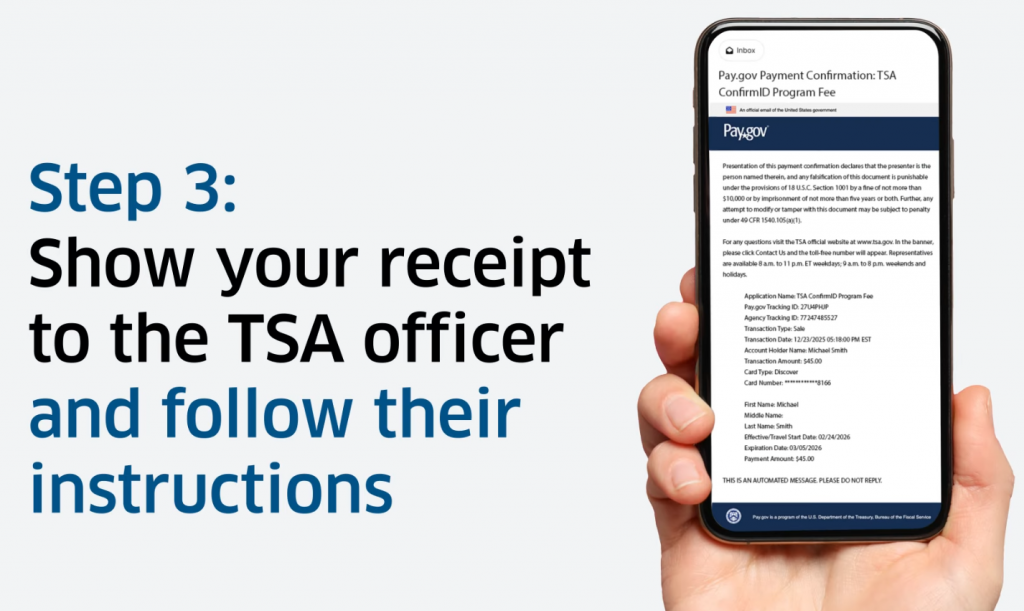
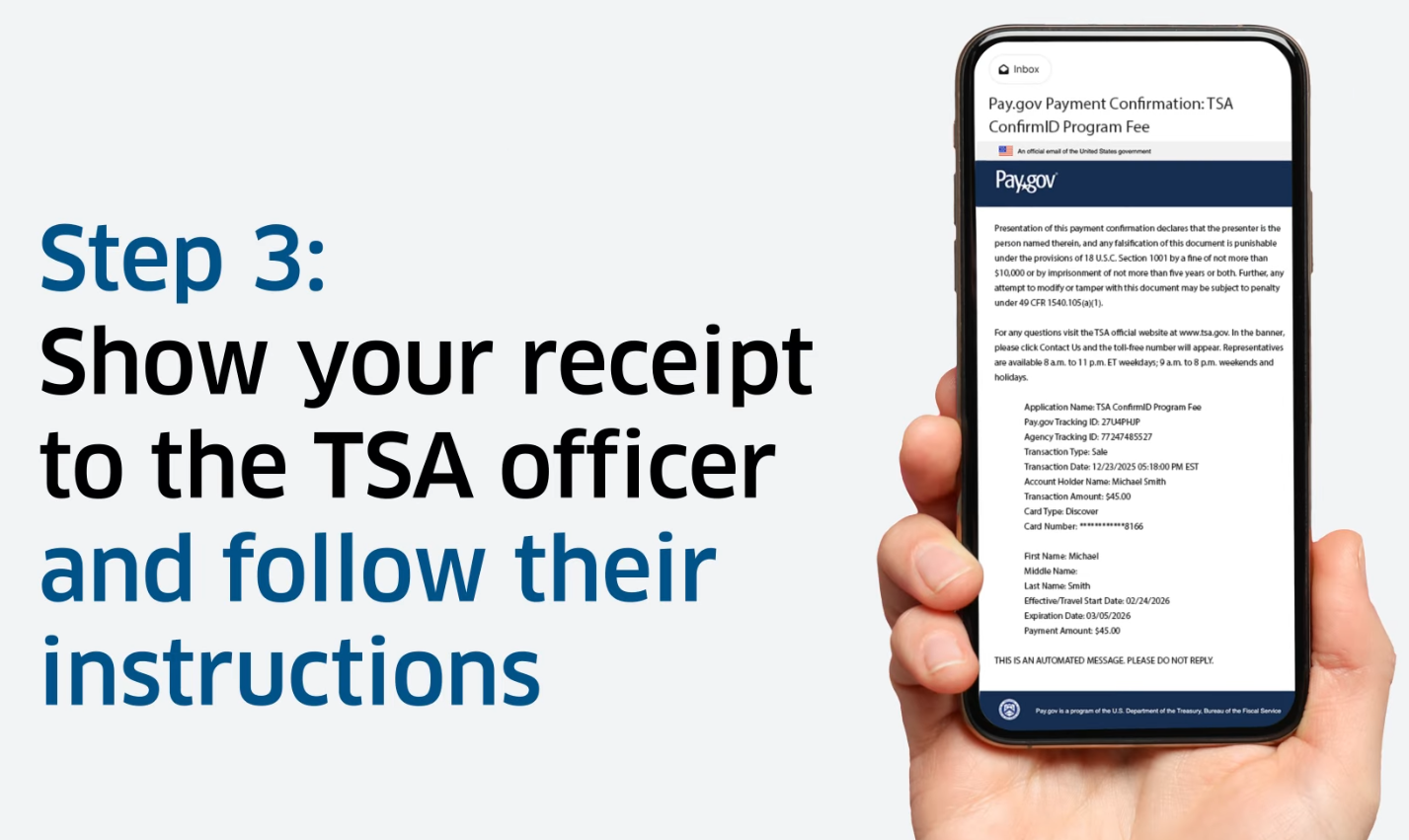
screenshot: Step 3: Show your receipt to the TSA officer and follow their instructions

Today the TSA launched a flagrantly illegal new extortion program, TSA ConfirmID,  to collect $45 from each airline passenger who wants to fly without showing REAL-ID.

As of today, only the payment platform for this “ID verification” program is operational. If you want to fly without REAL-ID on or after February 1, 2026, a new TSA video instructs you to pay $45 each through the Pay.gov website, bring your receipt to the TSA checkpoint at the airport, “show your receipt to the TSA officer and follow their instructions”.

Payments are accepted by ACH transfer from a bank account, credit or debit card, Venmo, or PayPal.

What will the TSA officer instruct you to do at the checkpoint? The TSA says that:

TSA will then attempt to verify your identity so you can go through security; however, there is no guarantee TSA can do so. Please note: Using TSA ConfirmID is optional. If you choose not to use it and don’t have an acceptable ID, you may not be allowed through security and may miss your flight.

The TSA says that you “may” not be allowed through the checkpoint, not that you “will” not. And the TSA’s FAQ says that, “In the event you arrive at the airport without acceptable identification (whether lost, stolen, or otherwise), you may still be allowed to fly”.

What are the procedures for this “attempt to verify your identity”? What are the criteria for  whether or not the TSA will allow you to fly? We don’t know.

A TSA propaganda video released last week falsely claims that, “Everyone knows that when you fly you have to bring a REAL-ID or a passport.” In fact, 200,000 people a day fly without REAL-ID and without a passport. (Any passport of any country is considered REAL-ID.)

It’s unclear what will happen to travelers who show up at TSA checkpoints on February 1st without REAL-ID, or with no ID at all, whether or not they have paid the $45 per person “TSA ConfirmID” fee. See our FAQ about your rights and what might happen.

As we pointed out when the TSA announced this plan in December, no law authorizes this scheme. No law requires airline passengers to have, carry, or show any ID — as the TSA itself has consistently argued, at least to date, when the issue has been raised in court.

The TSA has promulgated no regulations for “TSA ConfirmID”, has published no Privacy Act notice for the information collected from travelers either when they pay the $45 fee or when they go through the TSA checkpoint, and has neither requested nor received approval from the Office of Management and Budget (OMB) for this collection of information, as is required by the Paperwork Reduction Act (PRA).

“TSA ConfirmID” isn’t mentioned in any of the Privacy Act notices for the TSA’s systems of records. Operation of a system of records by a Federal agency without first publishing a proper notice in the Federal Register is a criminal violation of the Privacy Act on the part of the responsible  agency employees:

Any officer or employee of any agency who willfully maintains a system of records without meeting the notice requirements of subsection (e)(4) of this section shall be guilty of a misdemeanor and fined not more than $5,000.

Presumably, data collected from individuals who pay the $45 “TSA ConfirmID” fee is passed on to the TSA and stored in some (undisclosed) TSA system of records. The TSA officers and employees responsible for that system of records are, as of today, criminals.

Even the payment platform for the $45 fee is in flagrant violation of multiple Federal laws. The Pay.gov payment site and TSA ConfirmID payment form display no OMB control number, as is required by the PRA.

The Department of the Treasury, which operates Pay.gov, says specifically that:

An agency may not conduct or sponsor, and a person is not required to respond to, a collection of information unless it provides notice of a currently valid Office of Management and Budget (OMB) control number. Among other things, a notice of the expected time burden is required…. Pay.gov provides services to Federal agencies. These services include the posting of agency forms. Required notices that accompany these forms are the responsibility of those agencies.

There’s a link from the payment page to a Privacy and Security Policy, but the linked page doesn’t mention the Privacy Act, the PRA, or an OMB control number.

Since the TSA hasn’t chosen to follow the law or disclose any of its plans, the only way to figure out the de facto “rules” is to reverse engineer them from travelers’ experiences.

If you show up at a TSA checkpoint on or after February 1st without REAL-ID, or with no ID, please let us know whether or not you paid the “TSA ConfirmID fee” and what happened to you at the cehckpoint..

Keep a copy and/or take a photo or screenshot or any printed or online forms you are asked to fill out. If the forms or user interface pages don’t include a valid OMB control number, you can legally ignore them without penalty.

Are you allowed to fly without REAL-ID? With no ID? Without paying the “TSA ConfirmID” fee? If you are prevented from flying, who stops you? What do they say is the basis for their action?

You have the right to film and record at TSA checkpoints. Please share your experiences so we can better inform future flyers without ID or without REAL-ID.
Jan 02 2026

Collection of biometrics from anyone “associated” with a foreigner

As part of an array of proposals and rules issued by components of the US Department of Homeland Security to collect a widening array of biometric information and systems from widening categories of individuals, US Citizenship and Immigration Services  (USCIS) is proposing a new rule that would authorize collection of any form of biometric information or samples from anyone, including US citizens, “encountered” by USCIS or “associated with” any applicant for admission to the US, US residency, or US citizenship.

The proposed rule would give USCIS blanket authority, at its discretion, to order any such individual to report to any location worldwide specified by USCIS, and to submit to collection of facial images (“digital image, specifically for facial recognition”), fingerprints, palm prints, iris scans, retinal scans, voice prints, and/or DNA samples.

Underlying the proposal is an implicit but impermissible assumption that merely to “associate” with foreigners is sufficiently suspicious to create probable cause for a search.

Today the Identity Project and Fiat Fiendum, Inc., filed comments objecting to this proposal for warrantless, suspicionless searches as unconstitutional and contrary to US treaty obligations pursuant to the International Covenant on Civil and Political Rights:

U.S. Citizenship and Immigration Services (USCIS) component of the Department of Homeland Security (DHS) is proposing to “expand its routine biometric collections to include individuals associated with immigration benefit requests or other requests or require[d] collection of information…. DHS is proposing to revise 8 CFR 103.16 to require that any applicant, petitioner, sponsor, beneficiary, or individual filing or associated with a benefit request, other request, or collection of information, to include U.S. citizens, U.S. nationals, and lawful permanent residents, and without regard to age, must submit biometrics, unless DHS otherwise exempts the requirement.”

These individuals would be required to submit to intrusive searches at U.S. borders and ports of entry and exit, at places outside the U.S., and at places in the interior of the U.S.

These searches and collections of biometric information and samples would include facial photography (“mug shots”), fingerprinting, iris and retina scans, voice samples, and DNA samples, on a dragnet basis for all applicants or “associates” of applicants or at the “discretion” of USCIS, rather than on the basis of warrants, probable cause, or individualized suspicion.

The NPRM does not mention the Constitutional rights or human rights treaties it implicates, much less justify the proposed rules as Constitutional or permitted by treaty.

The proposed searches would be unconstitutional and violate U.S. treaty obligations.

Warrantless, suspicionless searches, solely on the basis of citizenship, immigration status, exercise of the right to freedom of movement, and/or “association” with other individuals, would violate the First and Fourth Amendments to the U.S. Constitution and U.S. obligations as a party to the International Covenant on Civil and Political Rights (ICCPR).

The proposed rule should be withdrawn.

Thousands of comments, almost all objecting to the proposed rule, are still being docketed. Once they are docketed, you can find all of the comments on this proposal here.


Dec 10 2025

CBP wants all visitors to install and use its smartphone app

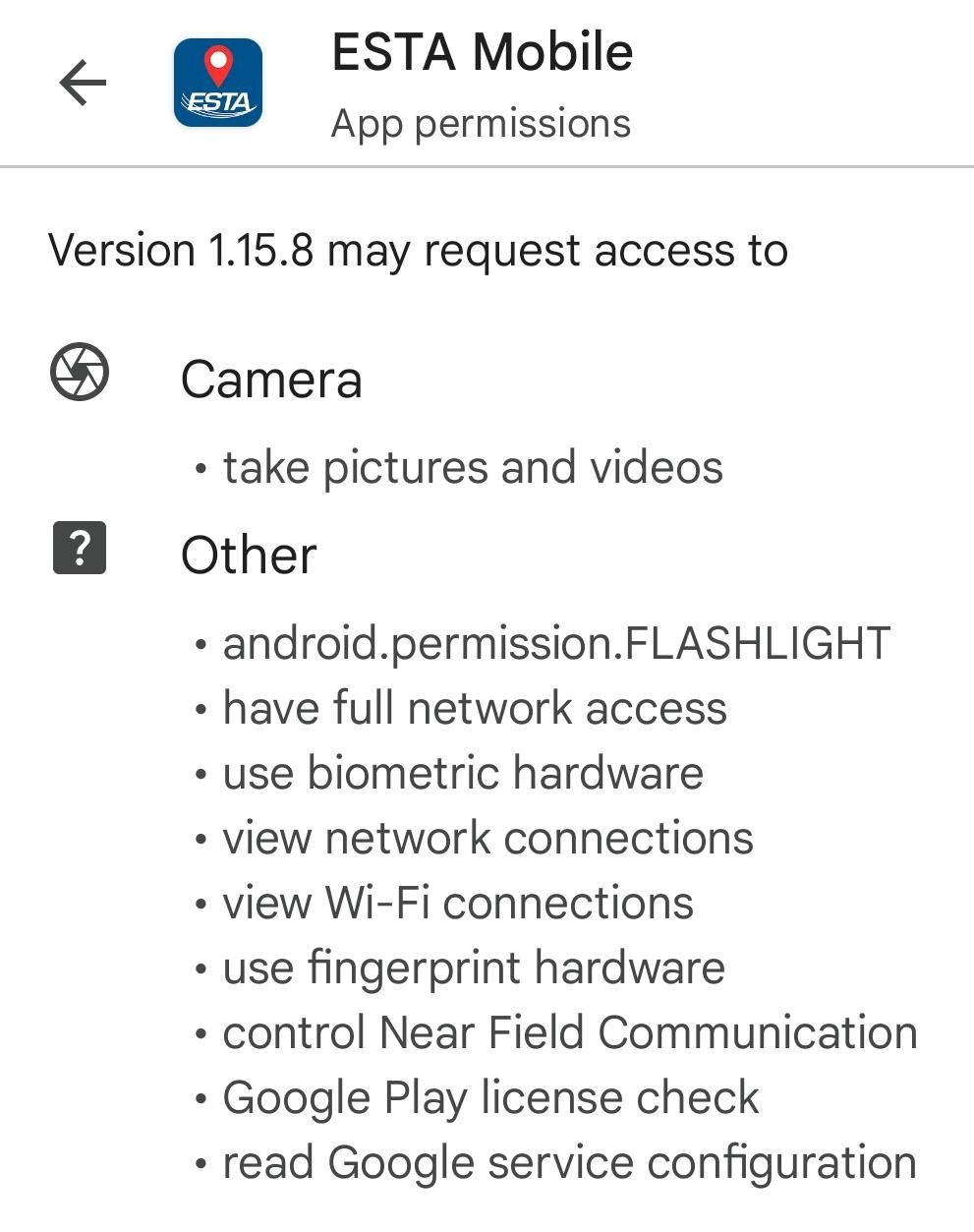
Permisisons requeste by ESTA Android app

[Permissions requested by ESTA Android app. Why does CBP want to be able control your flashlight?]

By a notice published today in the Federal Register, US Customs and Border Protection (CBP) is requesting approval not only to make all foreigners visiting the US without visas submit a comprehensive set of biometric identifiers (“face, fingerprint, DNA, and iris”) but to do so by installing and using a closed-source CBP smartphone app that requires permission to access Wi-Fi scanning and network data; take photos and video; access any fingerprint, iris scan, or other biometric sensors, and even turn on and off your flashlight.

Each visitor to the US under the Visa Waiver Program (VWP), for which the fee has recently been raised from $21 to $40 per person, would be required to submit, in advance, through this smartphone app, identifiers for all social media accounts they have used in the last five years.

Each visitor would also be required to submit what CBP calls “High Value Data Elements”. According to the notice:

The high value data fields include:

a. Telephone numbers used in the last five years;
b. Email addresses used in the last ten years;
c. IP addresses and metadata from electronically submitted photos;
d. Family member names (parents, spouse, siblings, children);
e. Family number telephone numbers used in the last five years;
f. Family member dates of birth;
g. Family member places of birth;
h. Family member residencies;
i. Biometrics—face, fingerprint, DNA, and iris;
j. Business telephone numbers used in the last five years;
k. Business email addresses used in the last ten years.

CBP thinks that the average visitor could compile and enter all of this data (typing on a smartphone) in 22 minutes,  including the time needed to contact each of their siblings and children to find out their five-year history of addresses and phone numbers.

Welcome to the 2026 World Cup!

Applicants for US visas are already required to provide a much more extensive set of personal data, including biometrics and identifiers for all social media accounts they have used. So this proposal, if approved, would expand collection of biometrics, social media identifiers, and the additional “high value data elements” to almost all foreign visitors to the US, with or without visas. The only remaining exception, which CBP doesn’t mention, is for asylum seekers who may have no documents and who require no pre-approval.

We continue to oppose warrantlesss, suspicionless compelled disclosure of social media or biometric identifiers or other information as unconstitutional and a violation of the human rights of travelers. And we oppose any requirement to provide this information in advance, when it could be collected on arrival in the US, when visitors apply for admission.

Read More

Dec 05 2025

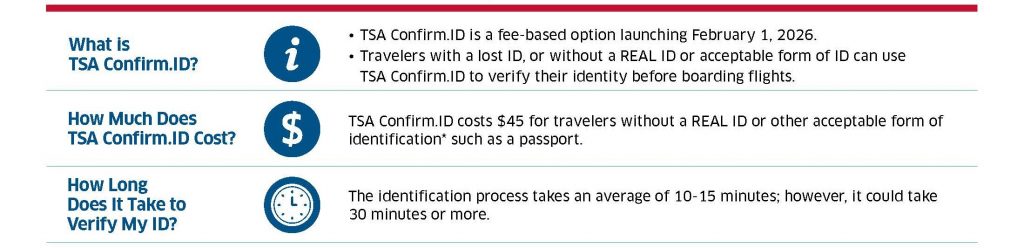
TSA Confirm.ID: TSA plans to charge air travelers without ID or without REAL-ID $3B a year in extra fees for extra questioning

TSA Coinfirm.ID

Since scare tactics haven’t gotten everyone in the U.S. to sign up for REAL-ID or show ID whenever they fly, the Transportation Security Administration (TSA) is turning to extortion through the threat of a new $45 fee to fly without “acceptable” ID.

The proposed fee and the modified “ID verification” program it would pay for are being described by the TSA as a fait accompli. But even if they were authorized by Congress and Constitutional — which we don’t think  they are — they have several months-long procedural hurdles to clear before they could legally be put into effect, and even then they would face the possibility of litigation by travelers, states, airlines, and perhaps others.

$3 billion dollars a year in extra fees for extra questioning of flyers

In its latest round of rulemaking by press release, the TSA has issued a series of procedurally irregular announcements indicating that the agency plans a new fee-based procedure for air travelers without “acceptable” ID, including those presenting ID that the TSA deems not to comply with the REAL-ID Act and those who don’t have or don’t show any ID at all:

  • A notice published by the TSA in the Federal Register on November 20th said the fee for flying without ID or without REAL-ID would be $18 per person for each ten-day period.
  • A second notice published on December 3rd, just two weeks later, announced that “based on review and revision of relevant population estimates and costs… and a revised methodology… TSA recalculated overall costs and determined that the fee necessary to cover the costs of the TSA Confirm.ID program is slightly more than $45.”

The drastic revision of the cost estimate and fee, so soon after the initial announcement, suggests that the initial estimate was sloppy,  rushed, or both, and perhaps that the entire new program is being hastily implemented, may not yet be clearly defined, and may fit the definition of agency action that is “arbitrary, capricous, an abuse of discretion, or otherwise contrary to law”. Any such action is liable to be “set aside” by the courts on the basis of the Administrative Procedure Act (APA).

According to a press release posted on the TSA website on December 1st, “Currently, more than 94% of passengers already use their REAL ID or other acceptable forms of identification.” That’s only one percentage point higher than the 93% compliance the TSA announced after the first few weeks of REAL-ID “enforcement” in May 2025. These largely unchanged numbers suggest that the TSA is making little progress in persuading more travelers to sign up for a national-ID scheme or show their papers at TSA checkpoints.

Based on the current rate of roughly three million people a day passing through TSA checkpoints, 6% of whom don’t show ID the TSA deems “acceptable” (or don’t show any ID), 180,000 people a day would be assessed the proposed new $45 fee. That would generate $8.1 million a day, or $2.96 billion a year, in new revenue for the TSA.

The TSA’s initial notice claimed that currently “taxpayers pay[] for an individual’s identity verification services provided by TSA”. But each airline passenger already pays a fee of $5.60, collected by the airline, each time they pass through a TSA checkpoint at an airport.

This “9/11 Security Fee” was imposed when the TSA was created, and is supposed to cover the TSA’s costs  of searching air travelers. Air travelers, not taxpayers, pay for the TSA to grope, interrogate, and delay us. Charging a fee for this “benefit” is like charging a “police user fee” to be pulled over in a traffic stop, even if no violation is found and no citation is issued.

Read More

Dec 02 2025

Has the TSA added immigration enforcement to “Secure Flight”?

Arrest warrants have never been disclosed to be part of the Secure Flight algorithm used by the Transportation Security Administration (TSA) to process information about each domestic US airline passenger and decide whether to send the airline a Boarding Pass Printing Result (BPPR) authorizing the airline to issue a boarding pass or take other action.

But at least three incidents have made the news in the last month that together suggest that the TSA may have added  immigration orders to the Secure Flight ruleset, turning US airports and domestic flights into traps for unwitting foreign citizens.

Each of these individuals was unaware that there was an immigration order for their arrest or deportation. And there is no apparent basis or methodology for DHS to have known when and where to intercept them at airports other than matching of airline reservations and immigration enforcement orders — something never previously disclosed.

The Feds could have learned of planned domestic air travel by searching records of tickets settled through the Airlines Reporting Corp. (ARC) clearinghouse under a program that was exposed earlier this year and is supposedly now set to “sunset” by the end of this month.  But that wouldn’t have enabled the Feds to block the issuance of boarding passes, as reportedly happened in some of these recent cases.

At any time, there are millions of records of arrest warrants in the FBI’s National Crime Information System (NCIC) database. Many of these are inaccurate or out of date, such as long-since-quashed bench warrants for failure to appear in traffic court or pay fines on time. Local courts often report to NCIC when warrants are issued, but fail to report when they are cleared. Hundreds of people are arrested every day after traffic stops when local police run check on motorists and find warrants listed in NCIC.

Three million people a day travel by air in the US, sixty times as many as are stopped on the roads by local police. If every domestic airline reservation were checked against NCIC for outstanding warrants, thousands of domestic travelers would be arrested at US airports every day. That simply doesn’t happen. So far as we can tell, at least until the last month, you could be wanted for murder and fly back and forth across the US without ever being stopped — just as you can walk down the street without being required to identify yourself or subjected to a warrant check without probable cause to suspect you of a crime.

This is as it should be. The US Constitution rightly prohibits general warrants or all-purpose law enforcement checkpoints or searches without individualized probable cause.

Earlier this month we noted the unusual arrest of UK citizen and political commentator Sami Hamdi at San Francisco International Airport on October 26th when he went to check in for a domestic flight to the next stop on his US speaking tour. At the time, we speculated that perhaps the government had added Mr. Hamdi to its no-fly or “selectee” lists as a suspected terrorist. We already know that these lists are part of the Secure Flight ruleset. Now we wonder whether Mr. Hamdi’s treatment was an early case of the expansion of Secure Flight from a system ostensibly used for aviation security to a more general police dragnet.

We’ve been getting tips for years that some officials of the TSA, DHS, and other law enforcement agencies want to check all airline passengers for outstanding warrants. That would be technically straightforward. Once an algortithmic checkpoint is in place, it’s relatively easy to add new list-based or attribute-based rules to the algorithm. And the TSA has also wanted all-purpose authority for searches, seizures, and detention.

In court, though, the TSA to date has always pretended that warrantless Secure Flight “vetting” and warrantless administrative searches of airline passengers  are used solely to identify people and things that are demonstrably dangerous to aviation. Using  Secure Flight for immigration enforcement would require a completely new legal rationale, and would open the door to even wider use of airports as general law enforcement checkpoints.

In addition, the most recently-disclosed version of the TSA’s internal staff directive for disclosure of Secure Flight Data (SFD), issued sometime after January 20, 2025, says that:

SFD shall not be shared for purposes of ordinary law enforcement or tracking the movement of an individual who is not a potential or confirmed match to a watch list…. TSA will only respond to a written request for SFD by a law enforcement agency when there is a nexus to terrorism, transportation security, or national security for individuals not listed on the consolidated and integrated terrorist watch list. Exceptions to this policy may be granted on a case-by-case basis where an exigent threat to life or a similar extraordinary circumstance suggests that disclosure is warranted.

Routine use of Secure Flight for general law enforcement (warrant checks) or immigration enforcement would either violate this policv or have required a change in policy.

We welcome any information that can shed light on what’s really happening.

Please let us know of you hear of other immigration or criminal arrests at airports that appear to have been based on matching of domestic airline reservations with NCIC data.

Nov 17 2025

Targeting domestic travelers and restricting the right to leave the US

Political commentator and UK citizen Sami Hamdi was finally allowed by the US government to leave the US on November 12, two and a half weeks after he was arrested at San Francisco International Airport when he went to check in for a domestic US flight.

Mr. Hamdi had been a keynote speaker at the annual banquet of the Central Valley chapter of the Council on American Islamic Relations (CAIR) on October 25 in Sacramento, and was on his way to the next stop on his US speaking tour when he was taken into custody at SFO on October 26.

Mr. Hamdi had obtained a valid US visa prior to his arrival in the US. “Hamdi entered on a B-1/B-2 visa on October 19, 2025, and complied with inspection and admission”, according to the complaint filed on his behalf in Federal court during his detention.

No criminal charges were ever filed against Mr. Hamdi, and there has been no suggestion that he knew his visa had been revoked until he was taken into custody. The government has argued that issuance or revocation of any visa is entirely discretionary, and that once Mr. Hamdi’s was revoked, he was no longer legally entitled to remain in the US.

Even if that were factually and legally correct, it begs two important questions:

First, how did the immigration agents who arrested Mr. Hamdi at SFO know about his travel plans in order to intercept him?

Federal agents can use a TECS alert to monitor reservations for international flights for a person of interest, even without any charges or any warrant for search or arrest. This appears to be how Dr. Mark Bray was targeted for questioning by Feds at Newark Airport on the second of his two attempts on successive days last month to flee the US with his family.

However, Mr. Hamdi went to SFO to check in for a domestic flight, not an international flight. The TSA has long wanted to check reservations for domestic flights against warrants listed in the FBI’s aggregated NCIC database. But so far as we can tell, that hasn’t yet been done. If it were, hundreds of air travelers would be arrested every day, given the number of records of arrest warrants — many of them obsolete  or inaccurate — in NCIC.

And there’s been no hint that there were any criminal charges or any warrant – – even one based on  a sealed indictment — against Mr. Hamdi. So a “warrant check” seems unlikely.

The lists that are checked whenever an airline sends Secure Flight Passenger Data for a  domestic flight to the TSA, before the TSA returns a “Boarding Pass Printing Result” (BPPR) to the airline, are the “no-fly” and “selectee” lists which constitute a subset of the names in the Terrorist Screening Database.

We know that the no-fly and selectee lists have been used primarily to target Muslims. But as the name of the TSDB suggests, these are supposed to be used, and have been justified to courts as being used, solely for individuals who pose an identified threat to aviation security. There’s been no suggestion that Mr. Hamdi did anything to offend the US government or cause it to revoke his visa aside from saying things the US doesn’t want said, much less anything — no matter how offensive to anyone — that posed a threat to aviation security.

It thus seems likely — in the absence of any better explanation — that some Federal agency or official put Mr. Hamdi on the no-fly or selectee list as a way to use airports as a dragnet to catch him the next time he tried to fly, solely on the basis of pure speech that did not provide a basis for any criminal charges. If so, that was a gross abuse of the aviation “security” system and a significant foray into its use as a tool of political retaliation against disfavored speakers. If this could be done to Mr. Hamdi, it could be done to US citizens.

Second, why was Mr. Hamdi not allowed to leave the US sooner?

Normally, non-US citizens denied entry on arrival at US airports are detained only until they can be put on the first flight back to their port of embarkation for the US, or any earlier flight to that or any other destination for which they choose to buy a ticket.

There are five nonstop flights every day from San Francisco to London. Why, instead of being put on one of these flights the day he was detained, was Mr. Hamdi shipped in shackles to a private prison near Bakersfield and held there for more than two weeks?

Article 12 of the International Covenant on Civil and Political Rights, to which both the US and the UK are parties, provides that, “Everyone shall be free to leave any country, including his own.” And the UN Human Rights Committee has made clear that, “the scope of article 12, paragraph 2, is not restricted to persons lawfully within the territory of a State.”

So once Mr. Hamdi was deemed no longer entitled to remain in the US, and was not (and never had been) subject to any  criminal charges, he had a right, as a matter of international human rights treaty law, to leave the US at any time and for any destination.

Mr. Hamdi’s eventual departure was described as “voluntary”.  But it’s hard to see his leaving the country as uncoerced when they only alternative  he was offered was to remain indefinitely imprisoned without charges or trial.

Detaining Mr. Hamdi without the opportunity to leave the country, and holding him for  more than two weeks without letting him leave, was a clear violation of international law.